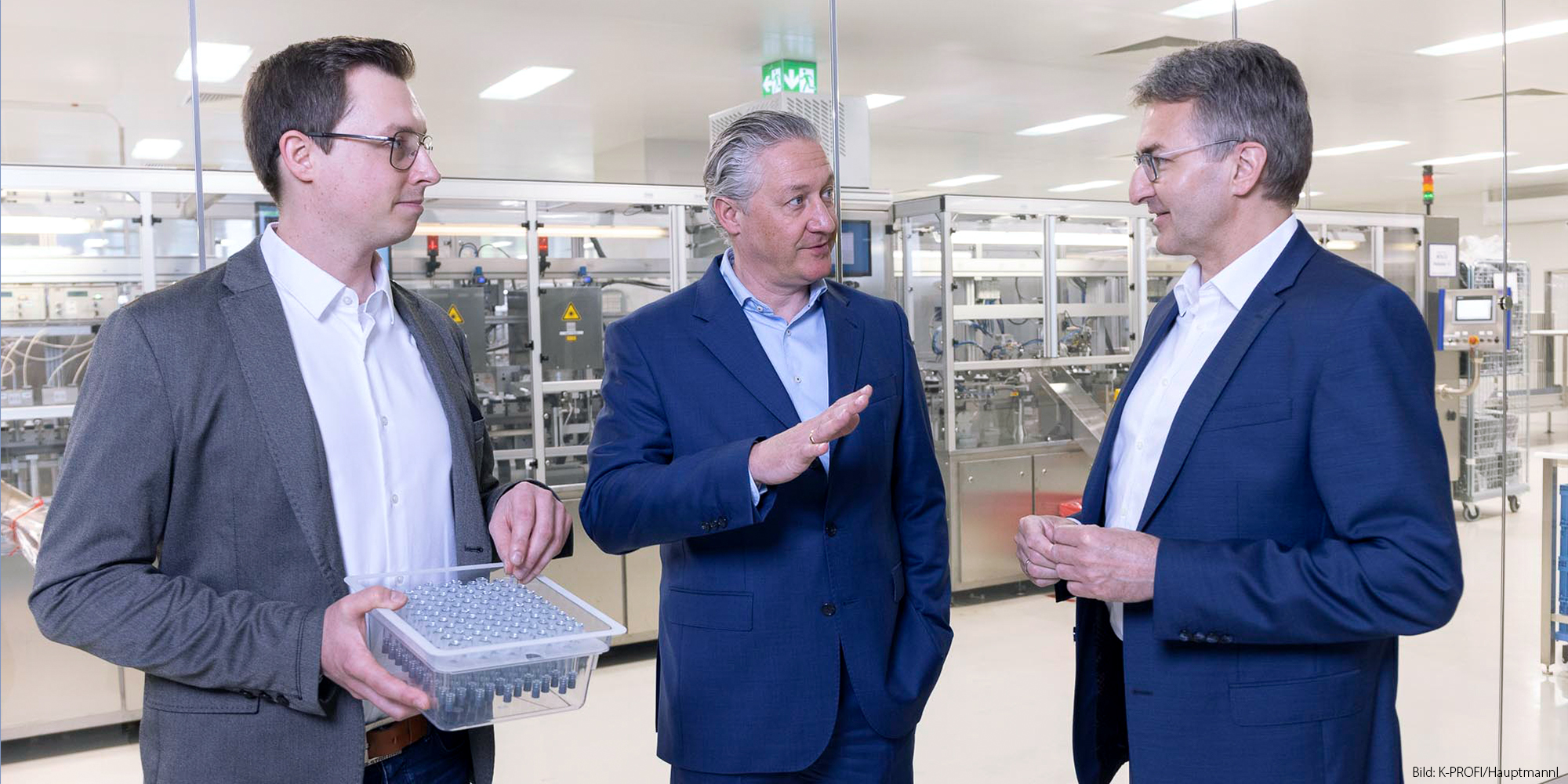
Whether at home, on a train, or at the doctor’s office—products from Wirthwein SE in Creglingen are everywhere, even if we don’t consciously notice them.
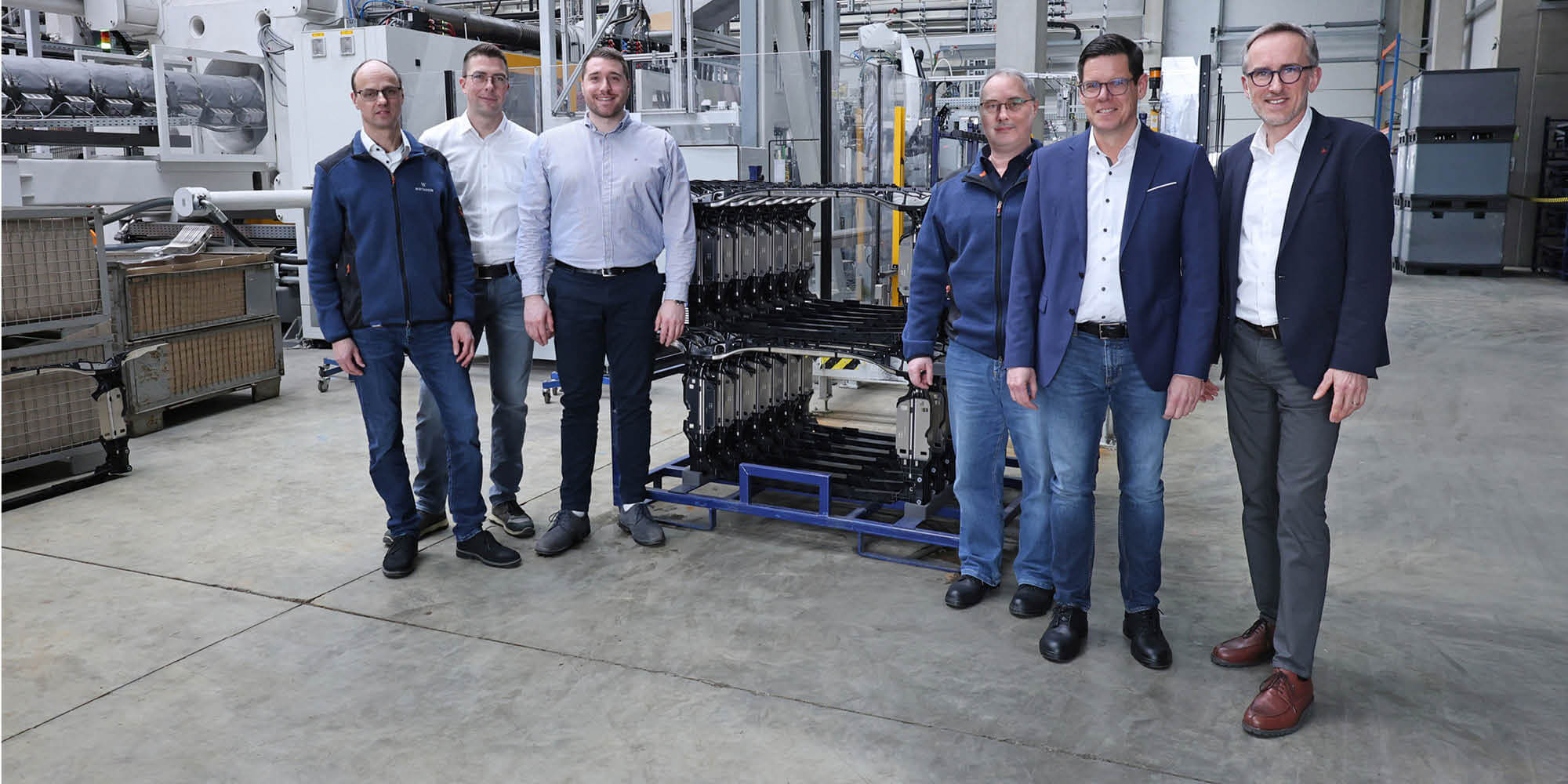
The international company is one of Germany's leading specialists in plastics technology and manufactures, among other things, washing machine door systems, cable ducts along railway lines, and pre-filled plastic syringes, which are used worldwide for applications such as vaccinations.
“Plastic is a blessing because it’s a recyclable material” – Thomas Kraus
And Marcus Wirthwein, Chairman of the Supervisory Board, emphasizes: “We contribute to environmental protection; for example, our plastic cable ducts reduce CO2 emissions by 80 percent compared to concrete alternatives. Our plastic components in vehicles replace sheet metal parts, thereby helping to reduce weight, which lowers fuel consumption and, in the case of electric vehicles, increases range.” And he makes it clear: “We are not a packaging manufacturer; this waste is the main cause of problems in the world’s oceans because there is no globally functioning recycling loop. We actively support the circular economy; for example, we process recycled materials or resell them sorted by type.”“
From a wooden peg to a high-tech component
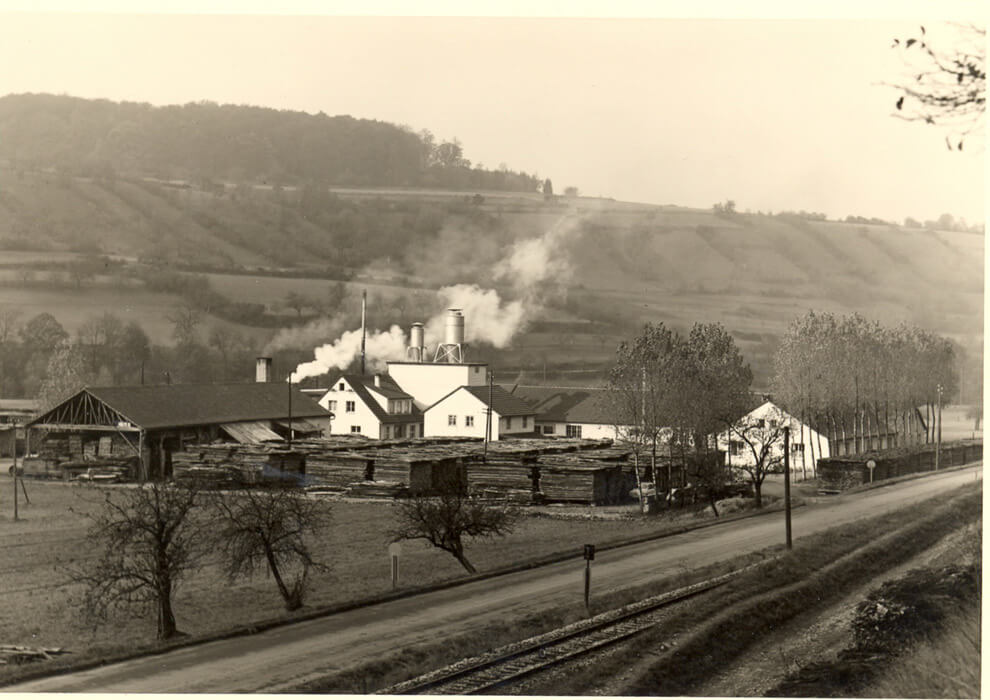
The company’s origins date back over 75 years, when founder Walter Wirthwein began by manufacturing wooden stakes for railway track beds and badminton rackets. In 1967, the company successfully entered the plastics industry. As one of the first partners to the railway industry, Wirthwein produced dowels for track fastening. In the mid-1970s, his son Udo Wirthwein took over the family business, which by that time already had over 100 employees. Today, approximately 2,700 people worldwide work for Wirthwein.
For Marcus Wirthwein, now the third generation to lead the company, the business is both a childhood memory and the story of his life: “I grew up on the company grounds in Creglingen; the house is still there today, and my mother used to regularly serve food to business visitors.” At first, his father worked exclusively on-site, but the fall of the Berlin Wall opened up new markets. A plant is established in Brandenburg, and Wirthwein enters the home appliance business. Additional locations in Germany, Poland, Spain, China, Turkey, and the U.S. follow. The company founds and acquires several firms and builds a broad business portfolio—ranging from rail and home appliances to the automotive industry, later expanded to include medical technology and technologies for renewable energy. Business is booming. Yet in recent years, these successes have been overshadowed by massive external crises: the pandemic, wars, supply chain issues, raw material shortages, and rising energy prices.
“We’ve been in a constant crisis for the past five years. Not a single year has gone normally, and 2026 will be no different” - Marcus Wirthwein
The impact is clear: In the home appliances and mobility sectors, Wirthwein is expected to see a decline in revenue of around 20 percent in 2023. The volatility of electricity and oil prices is particularly painful, as the production of plastic parts is a highly energy-intensive process. This is an additional burden on the company.
Realignment: Three segments with a promising future
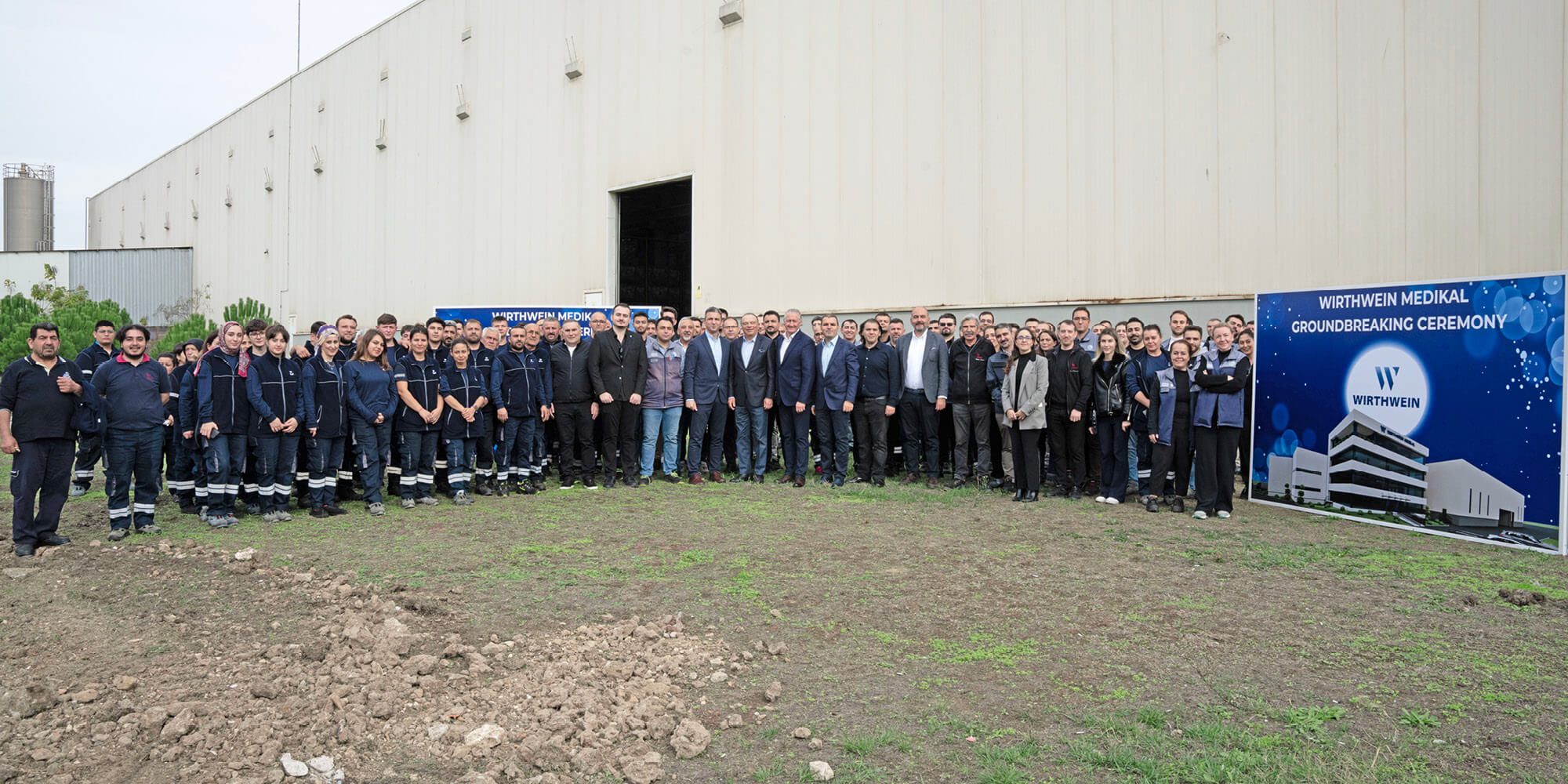
To respond to changing markets, the executive board has reorganized and decided on a strategic realignment three years ago. “We will not diversify further, but rather focus,” says Thomas Kraus. From the current six segments, three with strong growth potential have been selected: medical technology, the energy sector (including the data center business), and railway superstructure. This realignment brings both opportunities and losses. For example, a new plant will open in Turkey at the end of this year to produce hospital consumables and disposable diagnostic items. At the same time, two plants in Germany and one in China will be closed.
“We are still in the midst of this transformation and must continue to respond flexibly to the market” - Marcus Wirthwein
Marcus Wirthwein would like to see more reliable policies: “For years, we’ve felt like we’re being driven from one thing to the next; we can’t even sit down in peace and come up with a long-term strategy.”
Third-generation leadership—and perhaps soon the fourth
For the company owner, joining the family business was a natural choice. “The question of taking over the business never even came up—it just happened,” says the father of three. He has been part of the company’s management since 2005 and has served as chairman of the supervisory board since May 2024. He would be delighted if one of his three daughters were to take over the family business someday. That’s why he’s already involving them in day-to-day operations and letting them do an internship. It’s a principle he learned from his own father: “He took me to Brandenburg early on and involved me. This hands-on experience takes away the fear of having to fill shoes that might be too big,” says Marcus Wirthwein. For Wirthwein SE, transformation remains an ongoing process. The challenges of recent years have shown how quickly markets change and how important it is to remain flexible and innovative. But with a clear strategic direction, strong roots, and a team accustomed to change, the company sees itself as well-positioned.
Source: Claudia Lösler, IHK Heilbronn-Franken